Anser EMT
An open electromagnetic tracking platform
H. A. Jaeger, A. M. Franz, K. O’ Donoghue, A. Seitel, F. Trauzettel, L. Maier-Hein and P. Cantillon-Murphy
Original paper available here



In this talk...
- Overview of EM tracking
- Theory of operation
- Clinical applications
- Anser EMT
- Motivation for an open platform
- Design overview
- Evaluation & results
Electromagnetic Tracking (EMT)
- Sensor placed in magnetic field, voltage induced on a sensor
- Signal sampled 🡪 processed 🡪 position & orientation
EMT Output
$$P = [x,y,z,\theta, \varphi, (\gamma)]$$
- \([x,y,z]\), cartesian position of sensor
- \([\theta,\varphi, (\gamma)]\), yaw, pitch and roll
- No line of sight required
Applications of EMT
Neurosurgery, ENT Virtual bronchoscopyMotivations
- EMT is a key enabling technology
- Safe, radiation free
- No line-of-sight required
- Technical challenges
- Accuracy, precision & interference
- Hardware cost
- End-user needs
- User survey

User survey
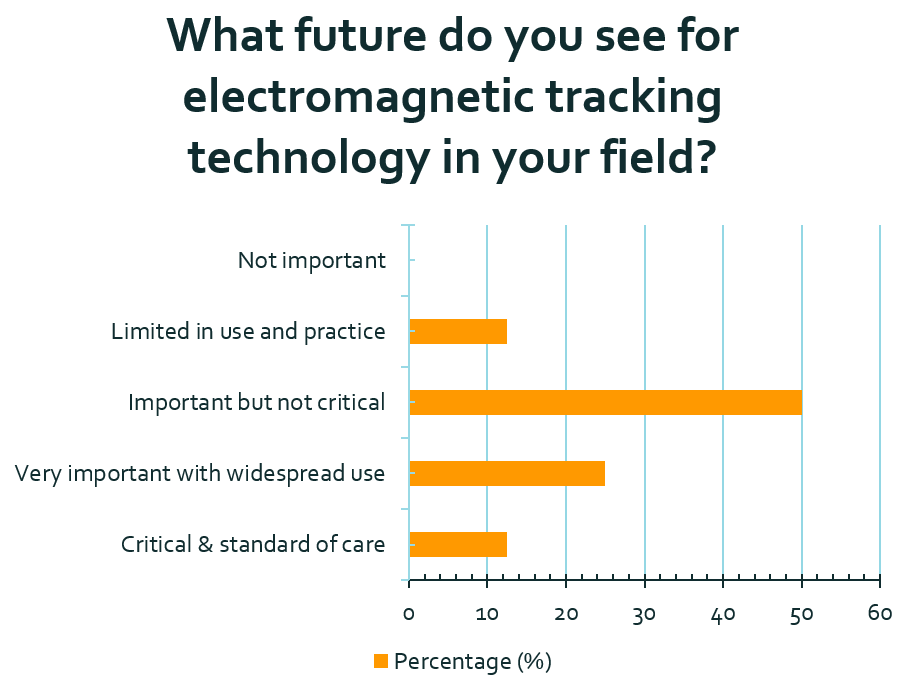
User Needs

Participate!
and click on the survey link.Anser EMT Goals
- Create an open electromagnetic tracking platform
- Address shortcomings of current solutions
- Develop a user community
- Provide a benchmark for future EMT designs
History of Anser
- PhD project 2014, Kilian O’ Donoghue
- “Electromagnetic Tracking and Steering for Catheter Navigation”, Thesis, University College Cork, Ireland
- K.O’ Donoghue et. al. “Catheter position tracking system using planar magnetics and closed loop current control” IEEE Trans. Magn. 50(7):1–9, University College Cork, Ireland
Anser EMT - Prototype
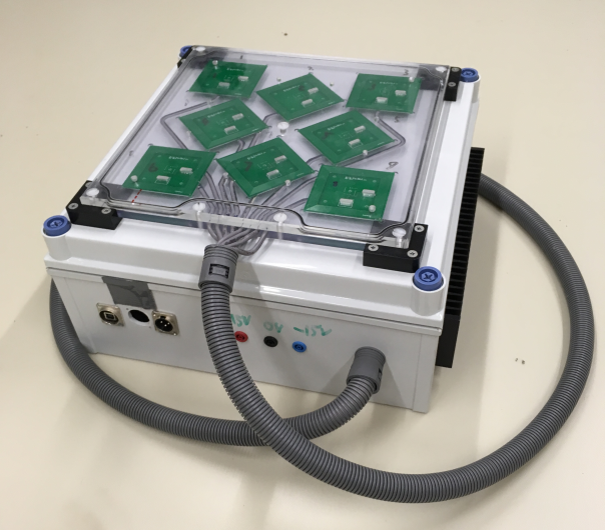
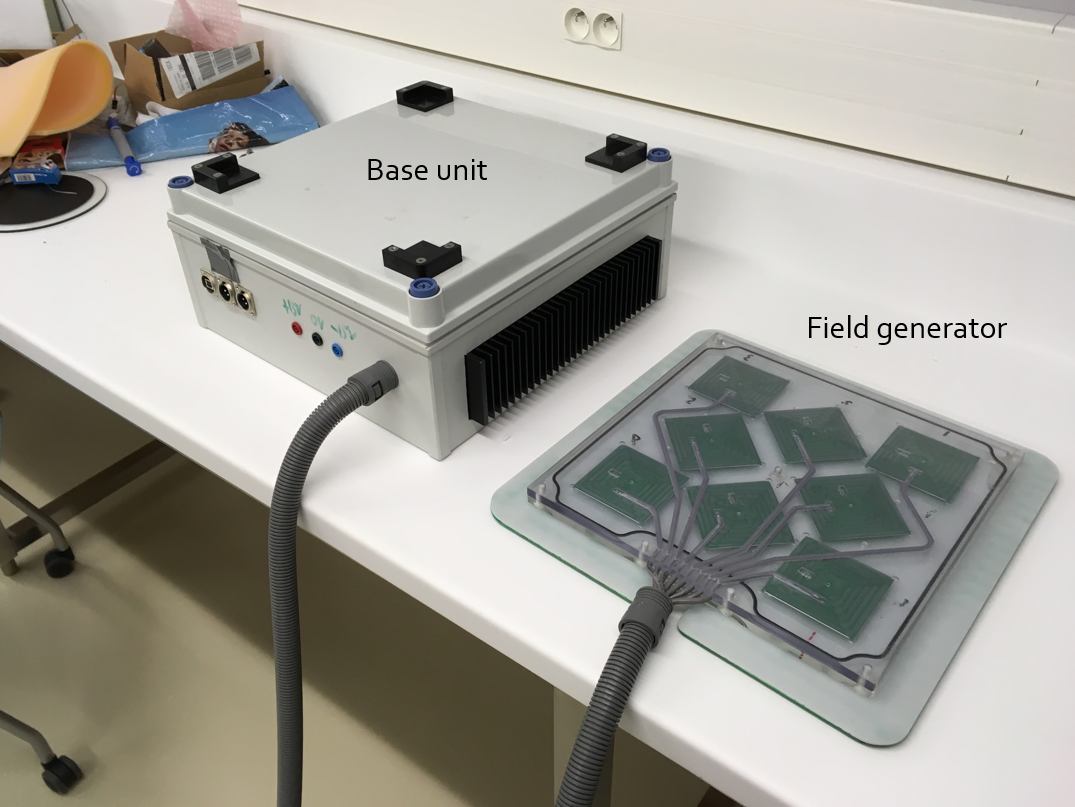 For transport
Deployed
For transport
Deployed
Anser EMT - Prototype
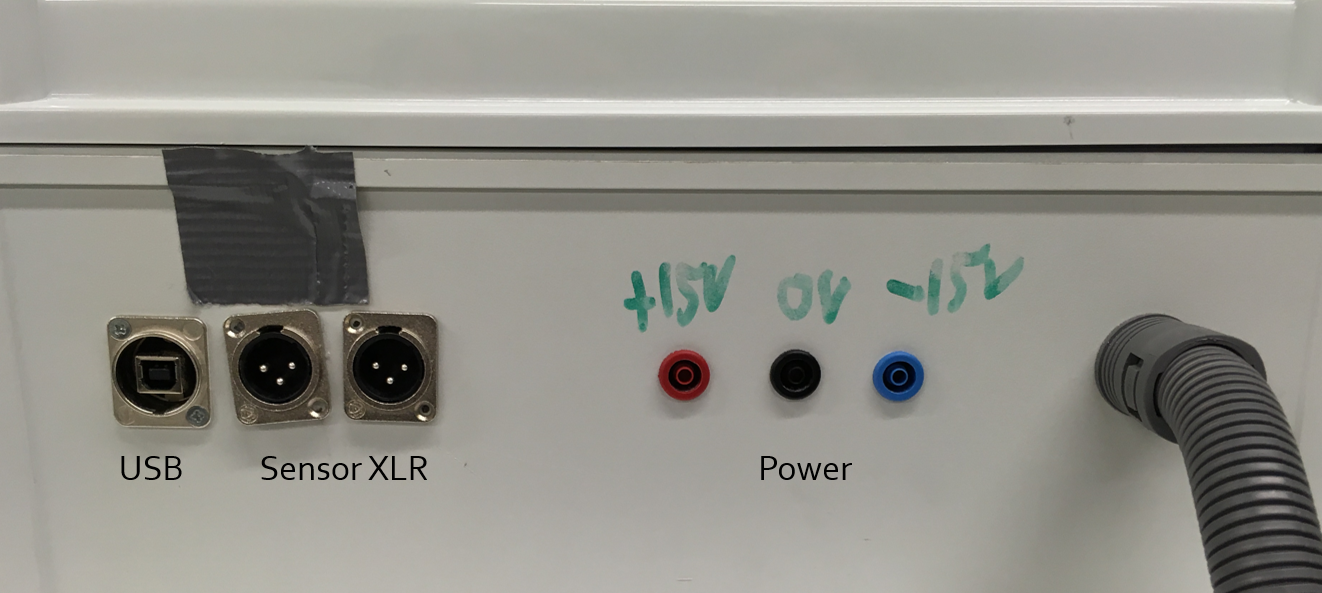
Front panel
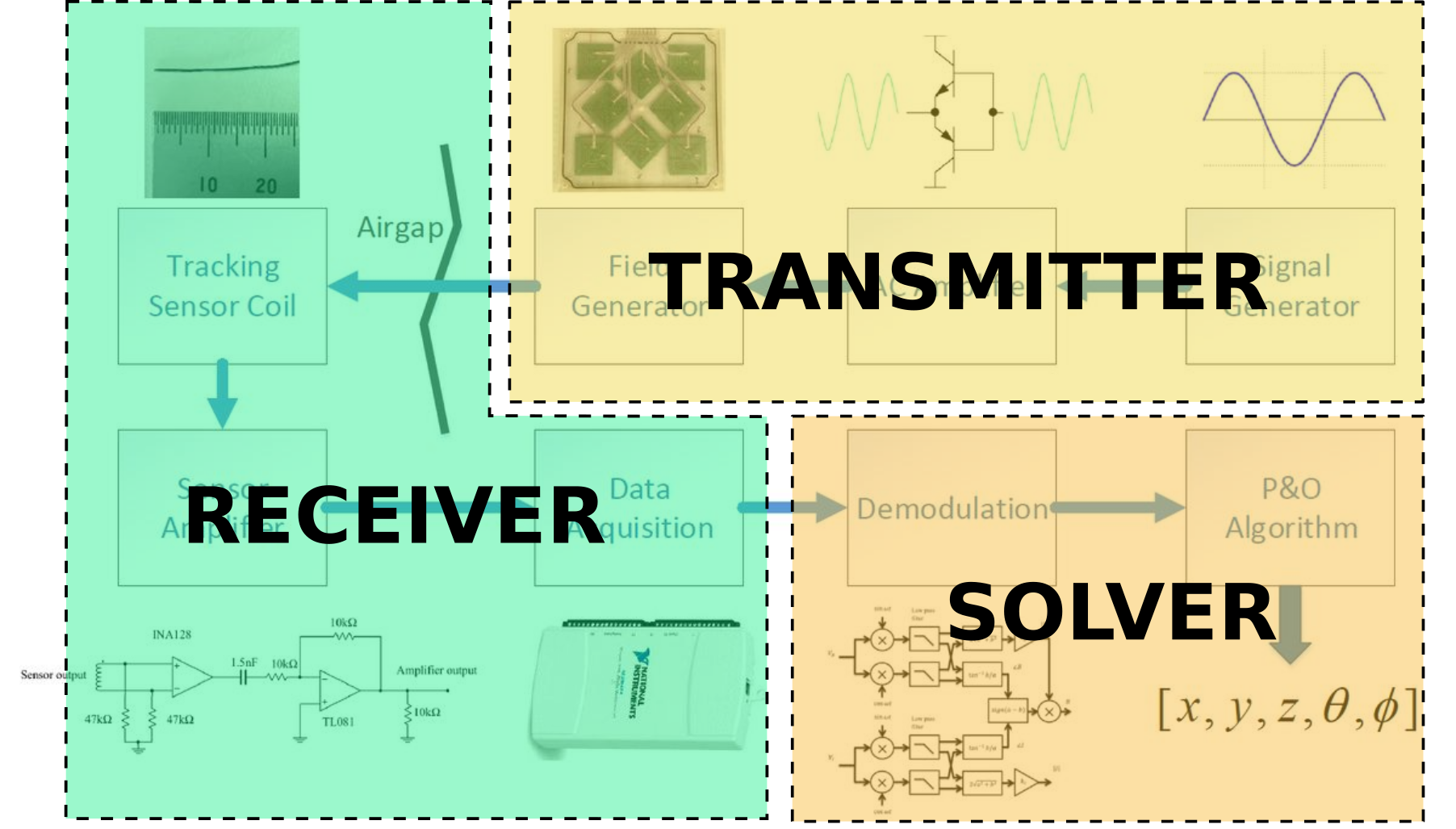
Anser Architecture
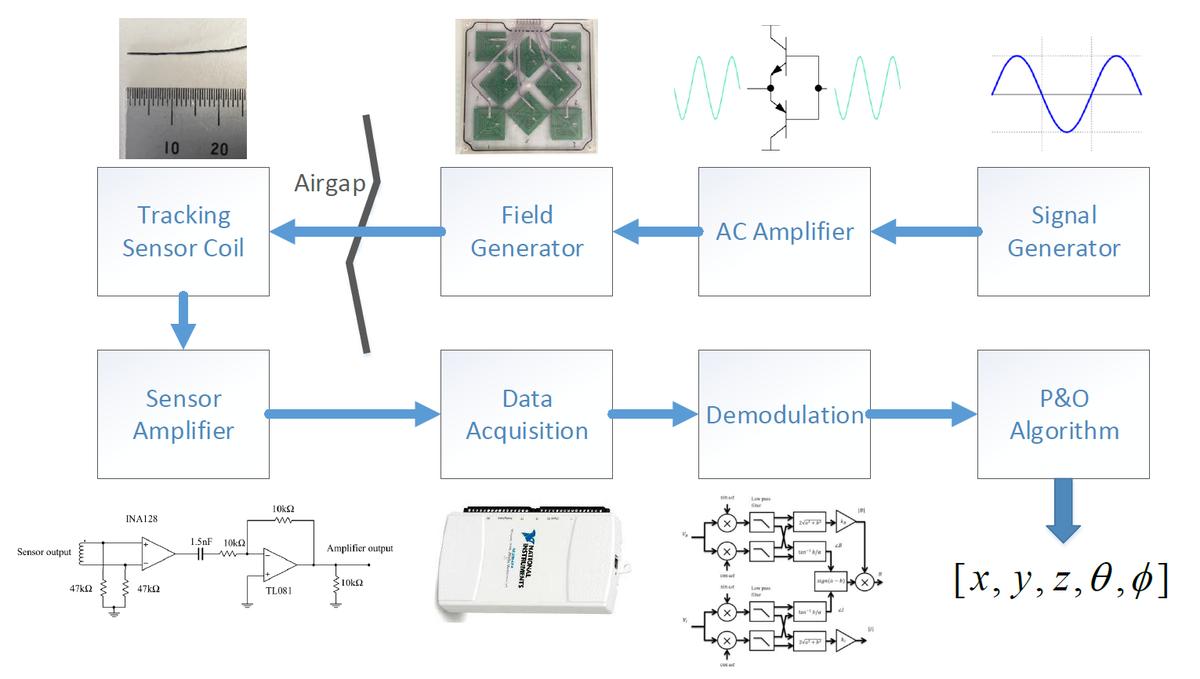
Reference Design
Transmitter Assembly
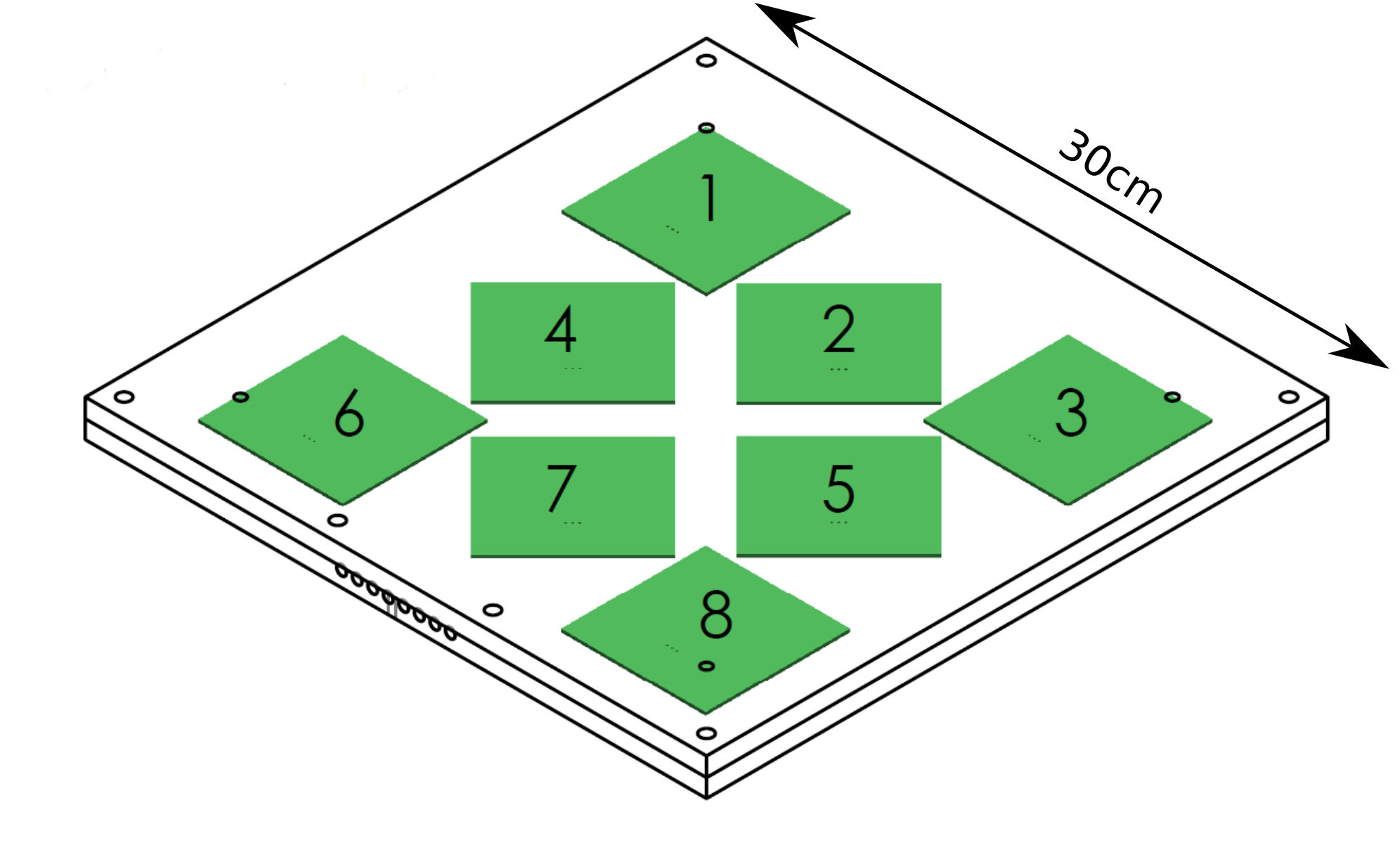
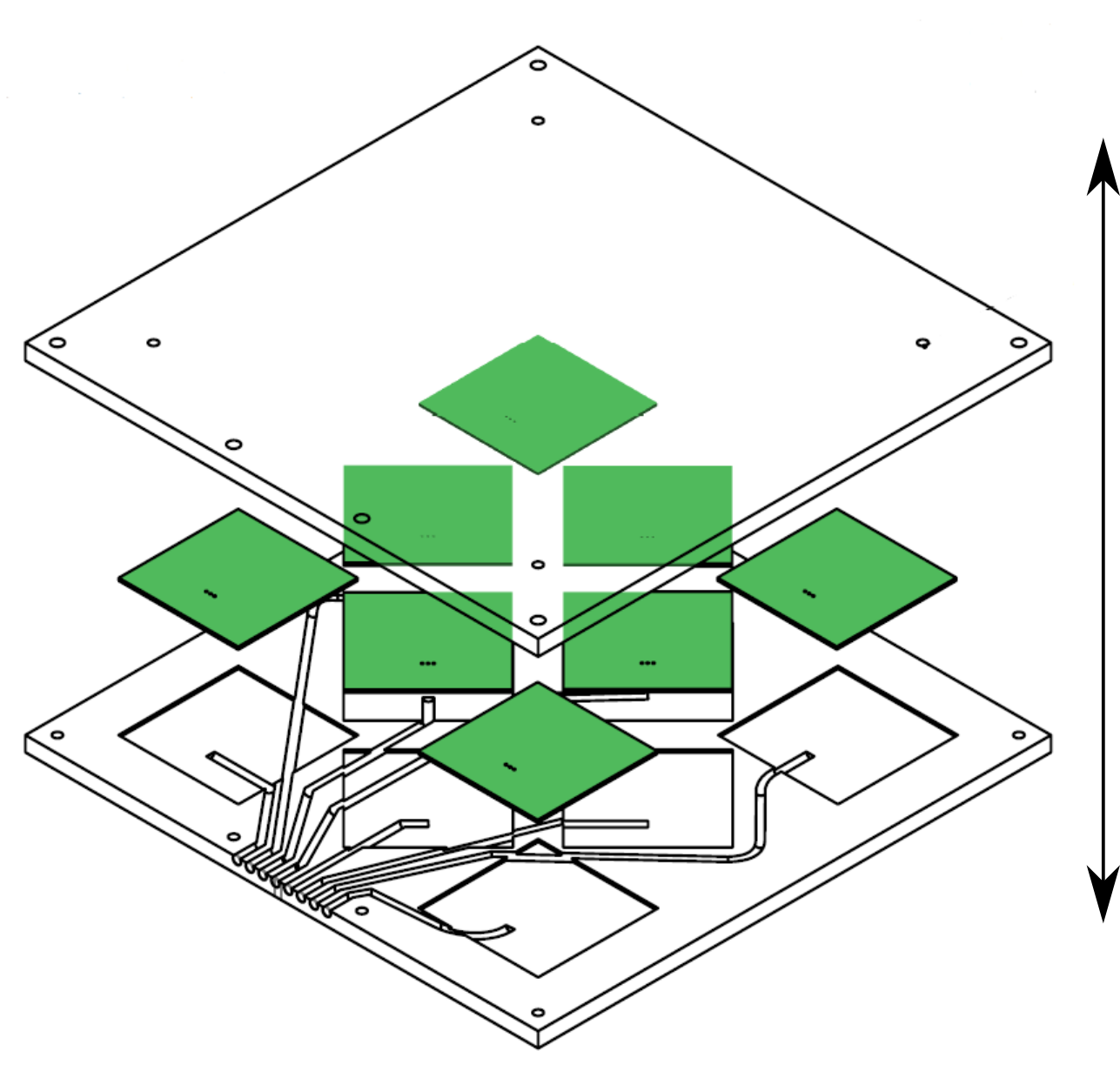
- 8 Coils, 8 Frequencies
- Lightweight, planar form factor
Plotkin et. al, IEEE Trans. Biomed. Eng. 2010, DOI: 10.1109/TBME.2009.2038495
Transmitter Coil
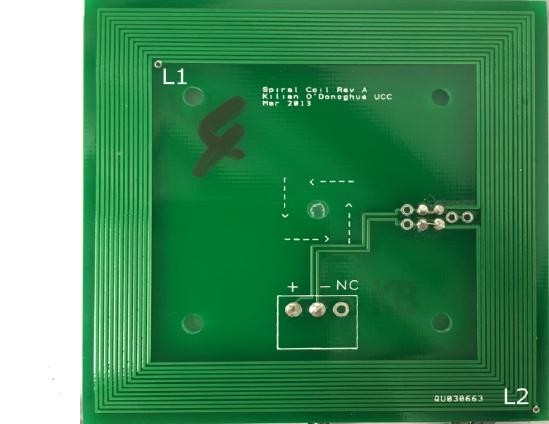
Dual sided Printed Circuit Board (PCB) emitter coil
Receiver
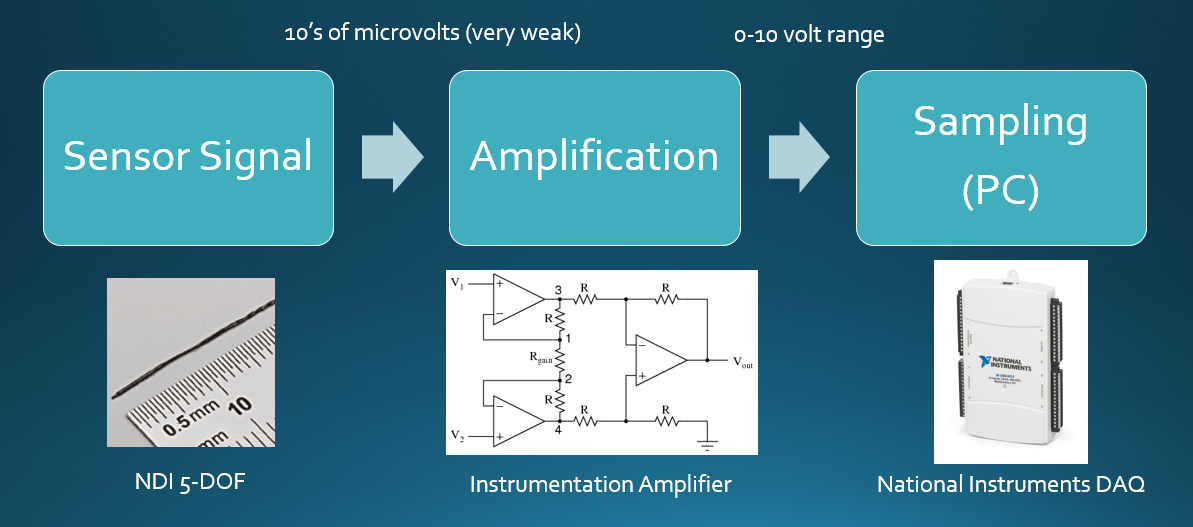
Solver
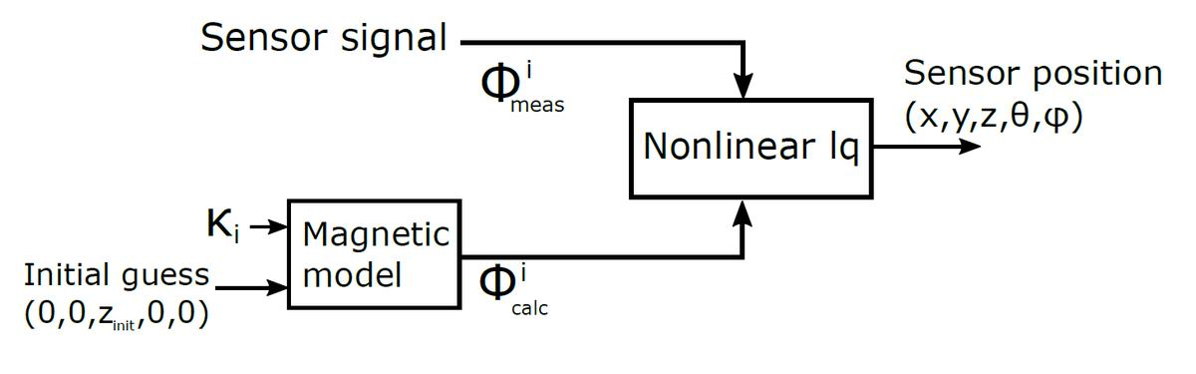 K.O’ Donoghue et. al. “Catheter position tracking system using planar magnetics and closed loop current control” IEEE Trans. Magn. 50(7):1–9
Solver


 Need to translate solver from Matlab to Python

Anser Evaluation
- Standardised assessment [1]
- Hummel Protocol
- Performance comparison with commercial systems
- Siemens Artis Zeego evaluation
- DynaCT - Image quaility & position
[1] Maier-Hein L, Franz AM, März K, Hummel J, Birkfellner W, Gergel I, Wegner I, and Meinzer HP (2012), Standardized assessment of new electromagnetic field generators in an interventional radiology setting. Med. Phys. 39(6):3424:3434
Assessment setup
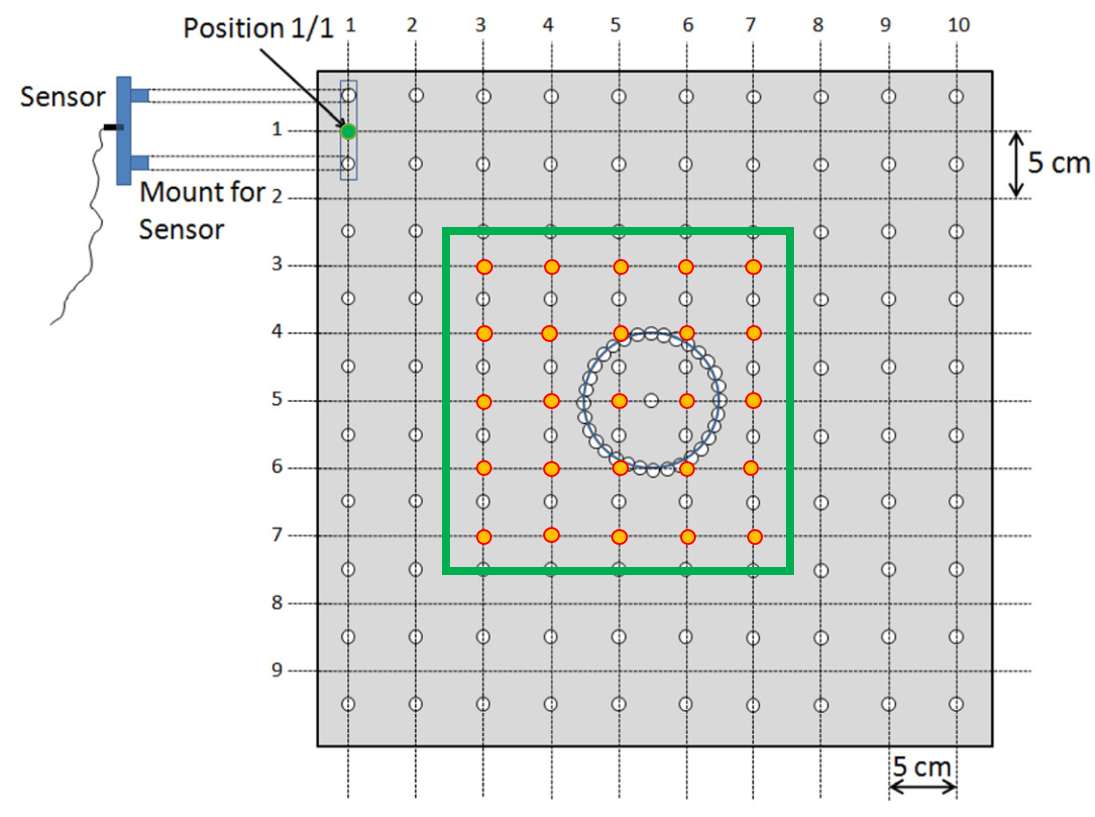
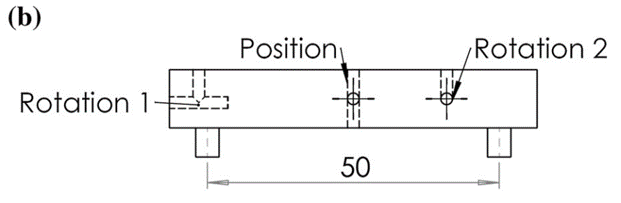
Hummel board (left) [1] 5cm grid spacing, 5x5 grid (red) 32 point circle, 11.25 ° spacing Sensor mount (above, right)
Assessment setup
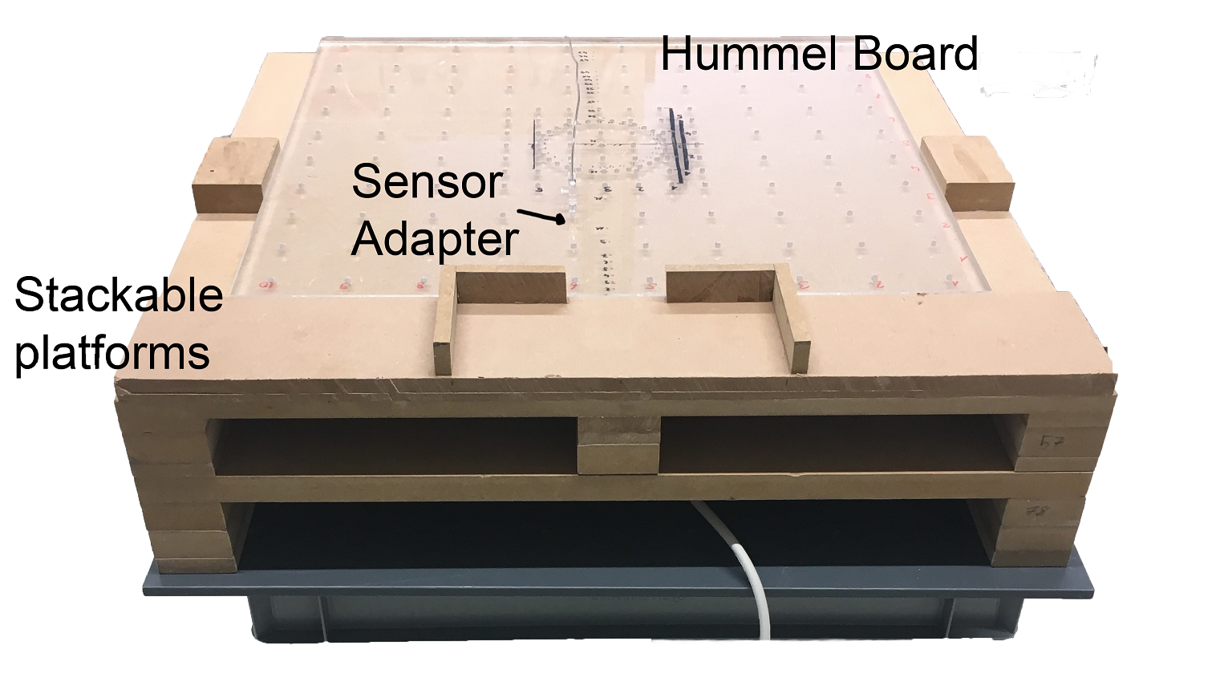
Physical setup
Assessment Method
- Position accuracy
- $N_p=25$ points (averaged over 150 samples)
- $N_d=20$ calculated distances
- Compare each with reference (5cm)
- Precision
- $N_p=25$ points
- RMS jitter calculated over 150 samples at each point
- Orientation
- 31 relative rotations
- 11.25 ° angle increments
Assessment Method
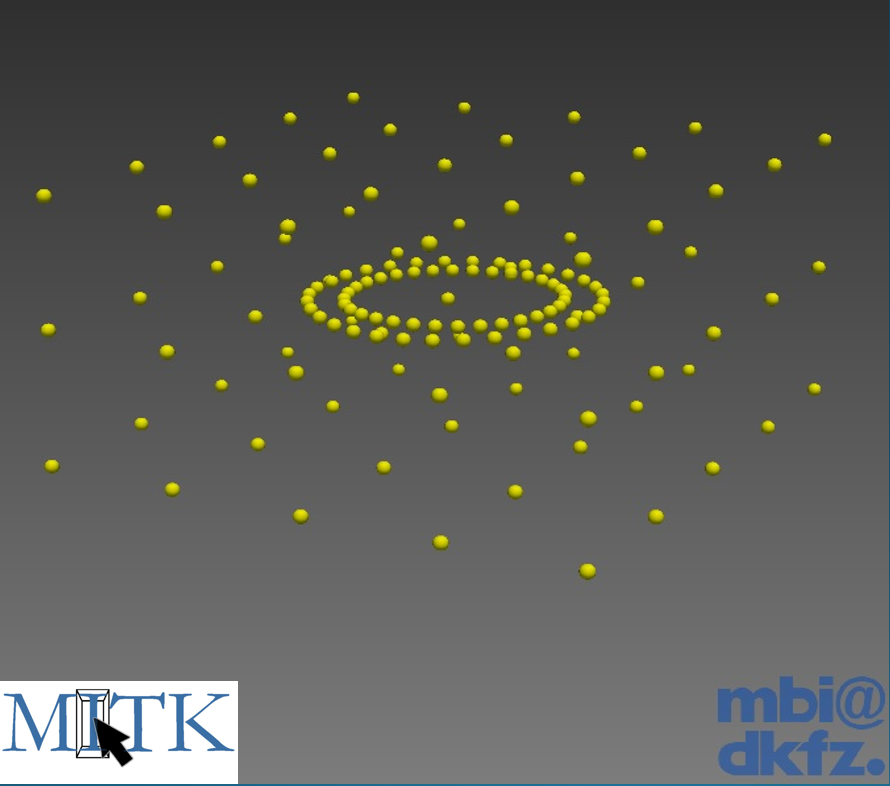
Acquisition performed in MITK
Results
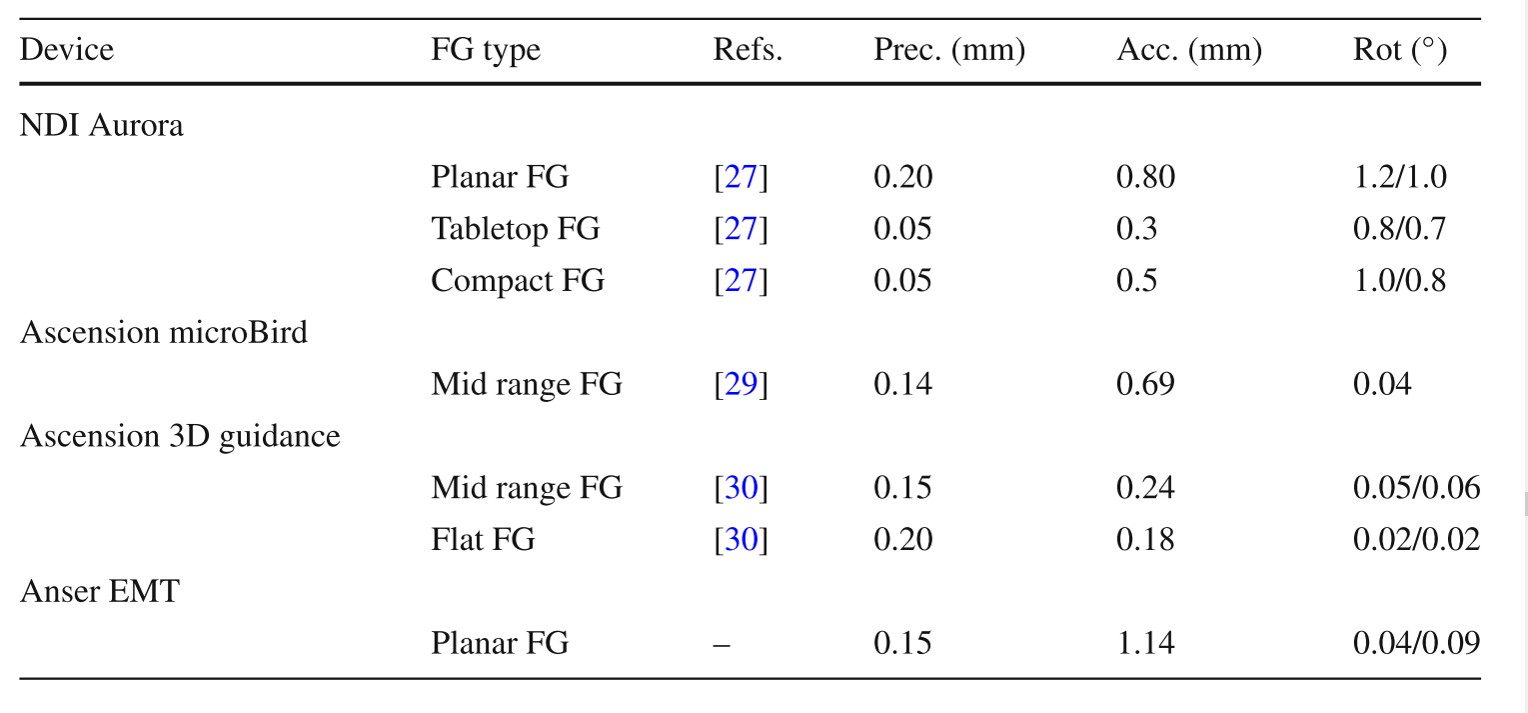 [27] Maier-Hein L, Franz AM et. al. (2012), Standardized assessment of new electromagnetic field generators in an interventional radiology setting. Med. Phys. 39(6):3424:3434
[28] Hummel J et. al. (2006) Evaluation of a new electromagnetic tracking system using a standardized assessment protocol. Phys. Med. Biol 51(2):205–210
[30] Much J (2008) Error classification and propagation for electromagnetic tracking. Master’s thesis, Tech. Univ. München, Munich, Germany
[27] Maier-Hein L, Franz AM et. al. (2012), Standardized assessment of new electromagnetic field generators in an interventional radiology setting. Med. Phys. 39(6):3424:3434
[28] Hummel J et. al. (2006) Evaluation of a new electromagnetic tracking system using a standardized assessment protocol. Phys. Med. Biol 51(2):205–210
[30] Much J (2008) Error classification and propagation for electromagnetic tracking. Master’s thesis, Tech. Univ. München, Munich, Germany
Artis Zeego Evaluation
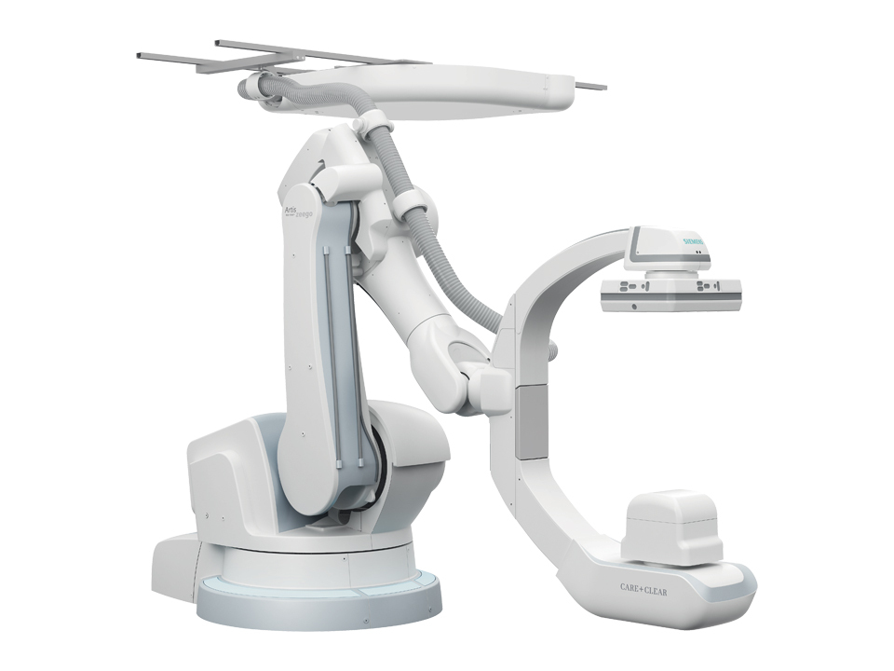
Artis Zeego provides:
- Interventional imaging
- Fluoroscopy
- 3D scan (DynaCT)
- Carbon fibre bed (Great for EMT)
- Zeego effects on EMT?
- EMT effects on Zeego?
Zeego Operation
Original video available here
Experimental setup
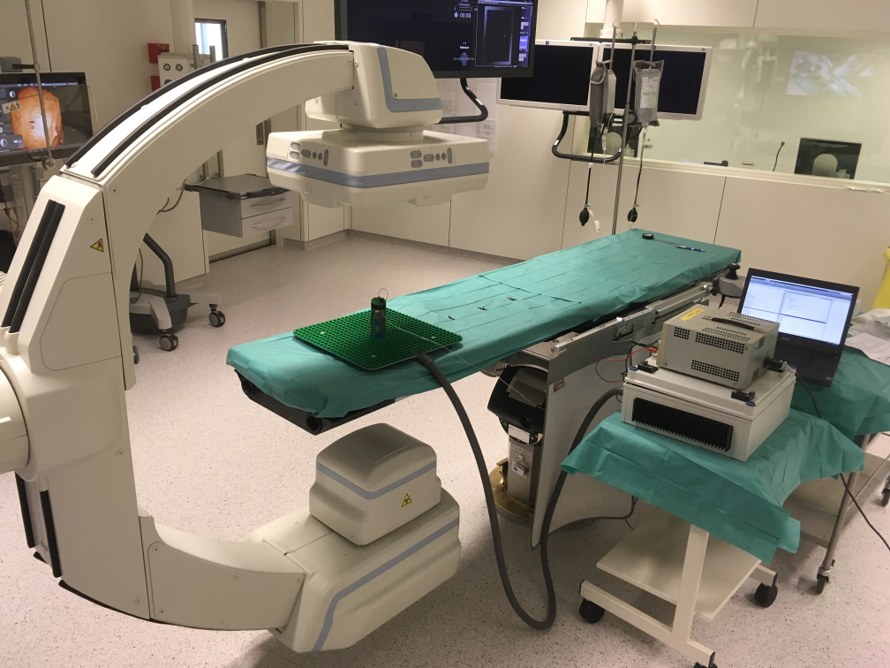
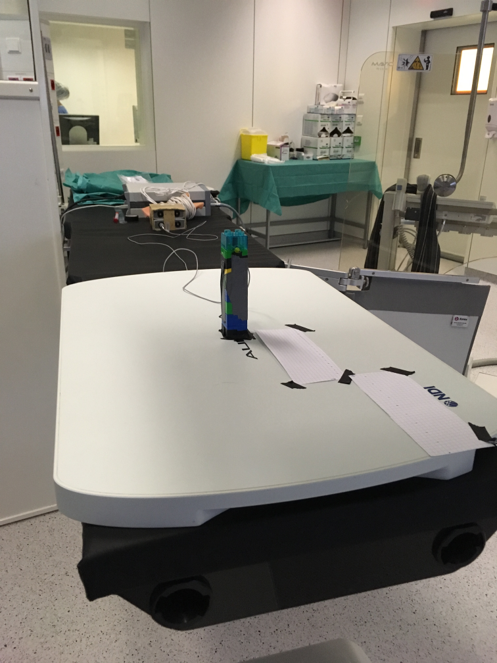
IHU Strasbourg Artis Zeego Platform with carbon fibre table; Anser EMT (left) and NDI Aurora planar FG (right)
DynaCT procedure
- Targeting laser centred on tracking system field generator
- EMT acquisition started (2000 samples), DynaCT scan performed
- Position plotted over time
- Scan image quality compared with control
DynaCT
NDI Planar Transmitter Anser EMTDynaCT Image Quality
Experiment Notes
- Zeego automatically adjusts the radiation dose depending on subject density
- High density materials (bone, metal) will be subject to higher dosages
- NDI Planar FG has larger spool coils & metal magnetic shielding
- Anser EMT has low metal content coils and does not have shielding
- Therefore radiation dosages differ between the two acquisitions
Conclusions
- Anser EMT compares favourably to commercial systems
- Precision and rotation measurements on-par with commercial systems
- Accuracy needs improvement: error > 1mm
- Improve enclosure tolerancing
- Improve calibration procedure
- Anser EMT not interfere significantly with Zeego imaging using a carbon fibre table